
- Characteristics of openwork plastic pallets
- What are the differences between full-top pallets?
- The use of full and openwork plastic pallets
Plastic pallets vary in construction and additional features that enhance their functionality. Basic pallet versions include those with a solid or openwork top, as they are ideal for industrial applications.
The former are easier to keep clean, while the latter are lighter, making them better suited for land and air transport. Learn what else distinguishes these two designs to determine which type of plastic pallet will best suit your needs.
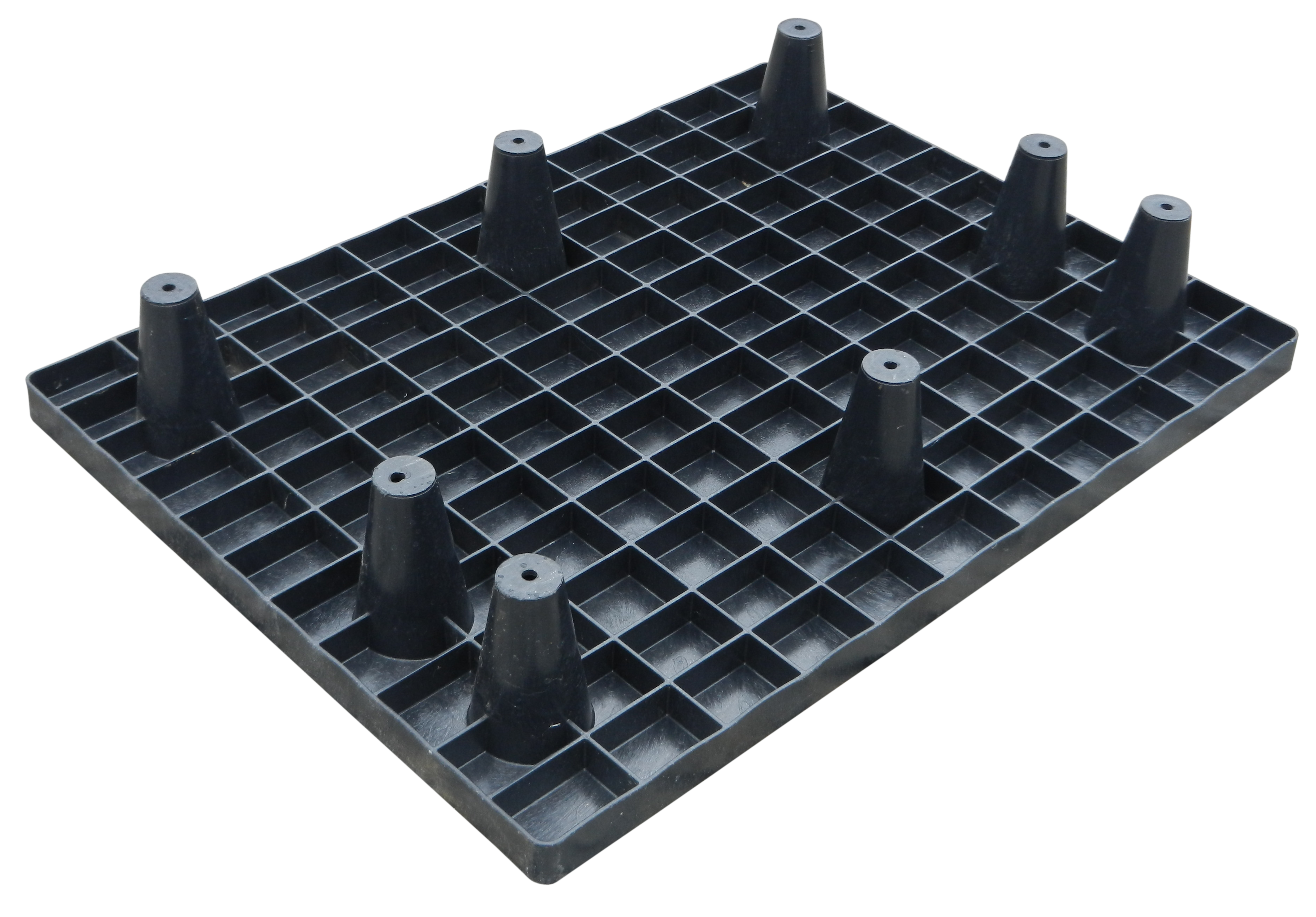
Characteristics of openwork plastic pallets
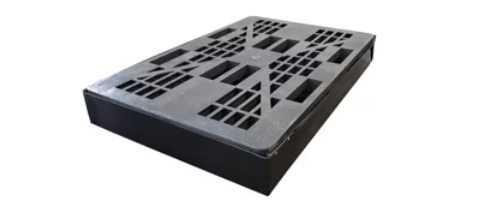
Openwork plastic pallets are characterized by a unique grid-like top. This design not only ensures easy access to the load but also makes the pallet significantly lighter than standard solid-top pallets.
Moreover, the open openwork top ensures better air circulation, thus creating appropriate conditions for storing loads and food, which should be observed in the food, pharmaceutical and cosmetics industries.
Of course, the latticework has some limitations, namely openwork pallets are less durable, so they are not recommended for carrying heavy loads.
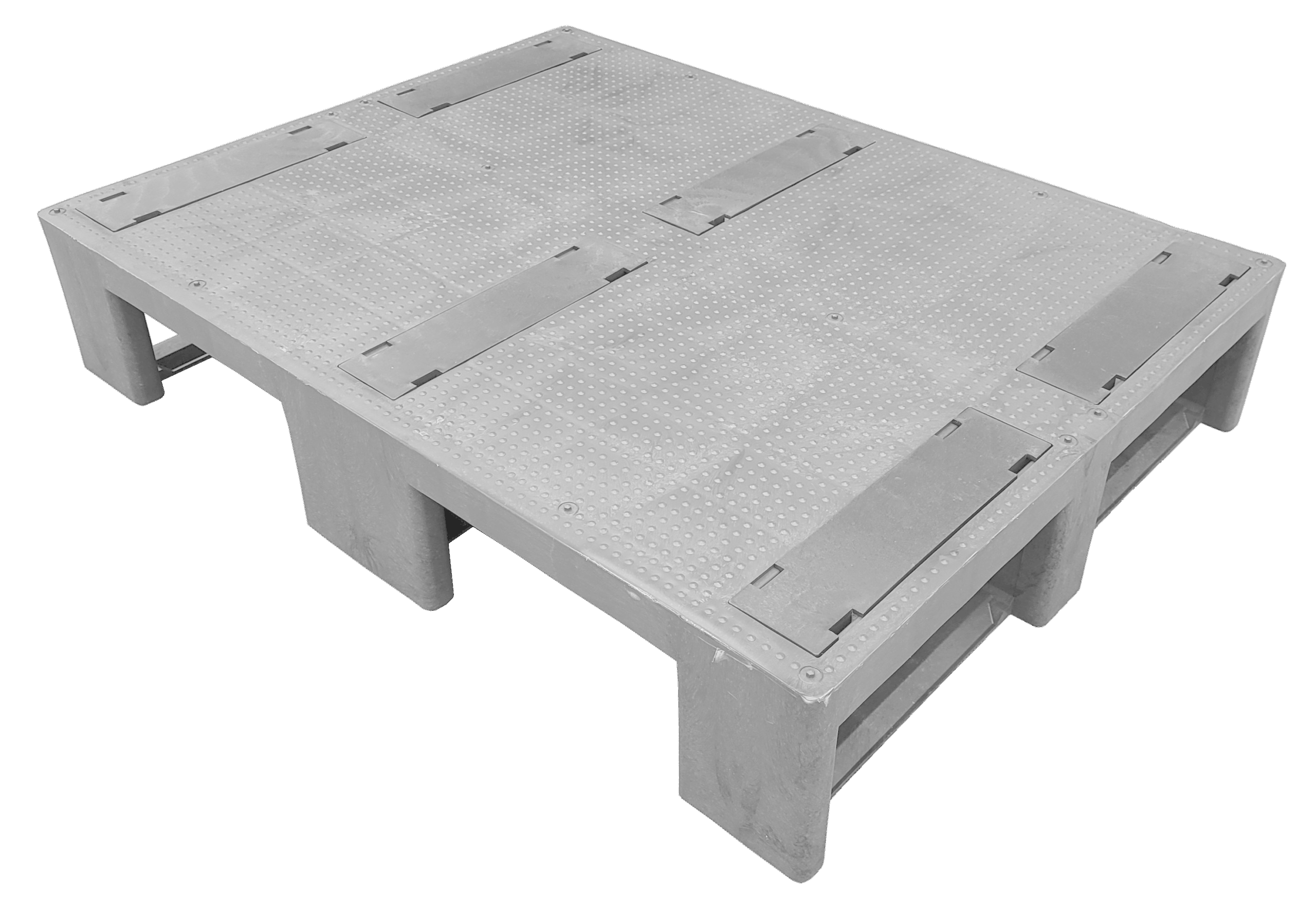
What are the differences between full-top pallets?
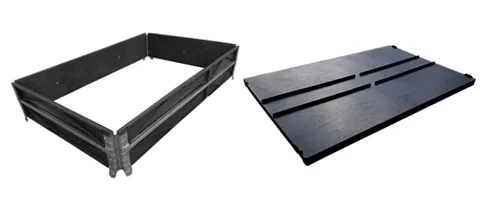
As mentioned, the smooth, full-surface top is exceptionally easy to keep clean, which is why these types of plastic pallets are often referred to as hygienic. They are characterized by greater durability, strength, and load-bearing capacity, allowing them to withstand high static and dynamic loads.
It is worth noting that pallets with a full top can be equipped with protective edges and an anti-slip surface. As a result, they effectively hold the load, preventing it from sliding during pallet transport or shocks while driving.
The use of full and openwork plastic pallets
For heavy-weight transport, openwork plastic pallets are much more suitable , as they reduce shipping costs. For example, they are ideal for air freight, as it has strict dimensional restrictions.
Additionally, pallets with a perforated top in the quarter-pallet version are used for in-store product display. This is because they are lightweight, easy to handle, and can be stacked with other pallets to minimize space usage during both storage and transport.
However, in the pharmaceutical and food industries, strict hygiene regulations apply. For this reason, only pallets approved for contact with food and other sensitive products are used. Such pallets include, among others, plastic pallets with a full top made of HDPE/LLDPE.
Related entries:
- What are plastic pallet collars used for?
Box pallets take up a lot of space in a warehouse or during transport, which is why they were created... - What are the differences between plastic pallets and half pallets?
Plastic pallets, unlike wooden ones, can be used in many industries because... - Why are wooden pallets often replaced by plastic pallets?
Nowadays, wooden pallets are increasingly being replaced by pallets made of... - What distinguishes Euro pallets from other pallets (e.g. industrial)?
Industrial pallets and Euro pallets are used to transport goods. However, in trade... - What should you pay attention to when buying plastic pallets?
Check what you should pay attention to when choosing the right variant of a plastic pallet...